


Last Updated: October 25, 2026
Quick Summary
To choose birthstone jewelry for gifts, start with the recipient's birth month, then consider their lifestyle, style preferences, and whether you need traditional or modern birthstone options. Match the jewelry style (pendant, ring, or bracelet) to their daily activities and select a stone type, natural, lab-grown, or treated, that fits your budget and their values.
- Every month has a birthstone with specific meanings, from January's garnet for protection to December's turquoise for peace.
- Pendants are the safest gift choice when sizing is uncertain; rings and bracelets require accurate measurements.
- Lab-grown stones cost less than natural stones while remaining chemically identical and appeal to environmentally conscious recipients.
- Birthstone gifts fall into three budget bands: under $150 for acquaintances, $150-$500 for close friends and siblings, and $500+ for spouses and milestone occasions.
- Stone durability matters for daily wear; sapphire and ruby score 9 on the Mohs hardness scale, while opal scores only 5.5-6.5 and requires careful handling.
Table of Contents
- Understanding Birthstones by Month
- How to Choose a Birthstone That Matches Your Recipient
- Birthstone Jewelry Styles and Metals to Consider
- Selecting Birthstone Jewelry for Mom and Other Loved Ones
- Evaluating Stone Quality, Color, and Durability
- Matching the Gift to the Occasion and Budget
- Finding Your Perfect Birthstone Jewelry Gift
- Frequently Asked Questions
Understanding Birthstones by Month
Every month has a birthstone with its own meaning, helping you choose birthstone jewelry that feels personal and meaningful.
The rest of the year: May's emerald for rebirth, June's pearl or alexandrite for purity, July's ruby for passion, August's peridot for strength, September's sapphire for wisdom, October's opal for creativity, November's topaz for warmth, and December's turquoise or blue topaz for peace.
These associations help you select a birthstone jewelry piece that feels personal. Giving someone their birthstone acknowledges something fundamental about who they are.
How to Choose a Birthstone That Matches Your Recipient
Selecting birthstone jewelry for gifts starts with the recipient's birth month. The real decision-making comes next.
Traditional vs. Modern Birthstones
Traditional birthstones follow centuries-old associations most people recognize and expect. Modern birthstones emerged in the 1950s and sometimes offer alternatives.
December traditionally pairs with turquoise, but modern lists add blue topaz or tanzanite; May traditionally features emerald, though some modern lists include chrysoprase.
If they've mentioned a favorite gemstone, let that guide you. Traditional stones feel safer for formal occasions or milestone gifts; modern alternatives suit those who appreciate contemporary options.
Natural, Lab-Grown, and Treated Stones
This choice impacts both the meaning and value of your gift. Natural birthstones are mined from the earth, rarer, often more expensive, and appeal to those who value authenticity.
Lab-grown stones are chemically identical but created in controlled environments. They cost less, offer excellent quality, and appeal to environmentally conscious gift-givers; many people can't tell the difference visually.
Treated stones have been enhanced to improve color or clarity, heat treatment is common for rubies and sapphires.
Consider your budget and the recipient's values: an environmentally conscious person might appreciate lab-grown, while someone who values rarity might prefer natural. Learn whether personalized birthstone necklaces are worth the investment to help you decide if this gift type aligns with your priorities.
Gemological Institute of America guidance on gemstone treatments
Birthstone Jewelry Styles and Metals to Consider
The style you choose shapes how often your recipient will wear the piece. A necklace works for everyday wear, a ring must fit both style and lifestyle, and bracelets require wrist-friendly sizing.
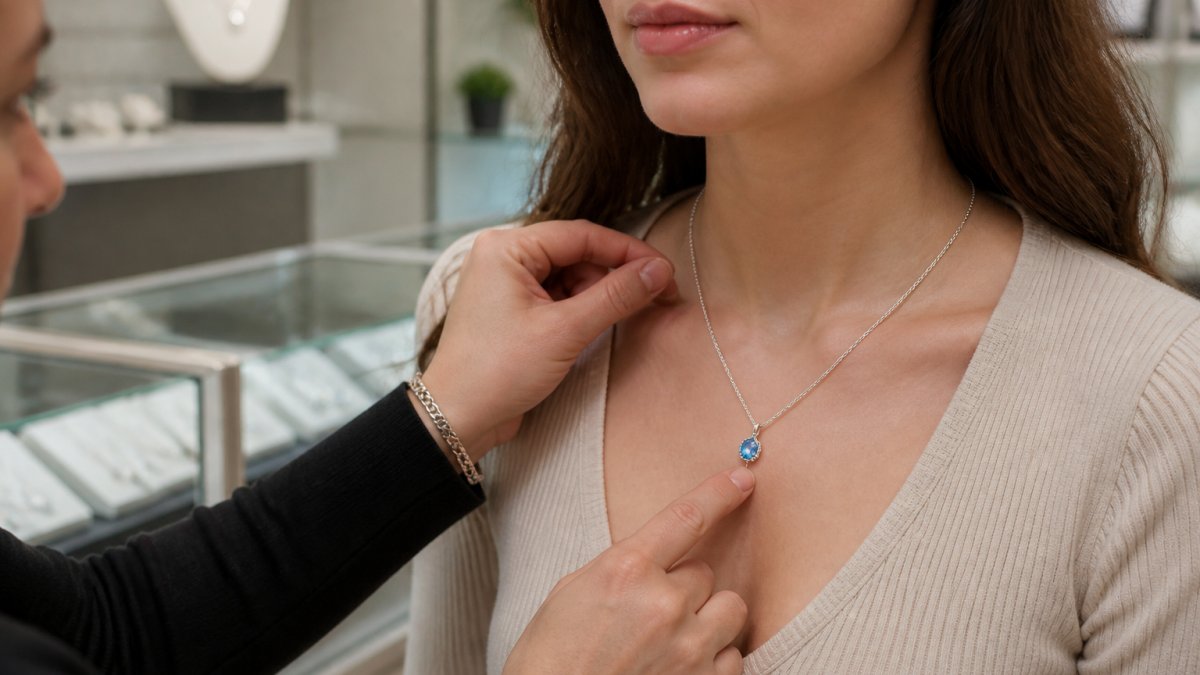
Necklaces and Pendants
Pendant necklaces are the most popular birthstone jewelry choice. Explore hidden engraving ideas for pendants to personalize this classic style with meaningful messages.
A solitaire pendant features the birthstone alone, letting the gem shine; a halo pendant surrounds it with smaller diamonds or complementary gems for added sparkle.
Chain length matters: a 16-18 inch chain sits at the collarbone and suits most body types, while a 20-24 inch chain drops lower.
Rings and Bracelets
Birthstone rings offer a personal touch visible in daily interactions. A solitaire keeps focus on the gem; a three-stone ring pairs it with complementary stones for balance and visual interest.
Ring sizing requires accuracy, an ill-fitting ring won't be worn. If you don't know the size, choose a retailer with resizing or an adjustable style.
Birthstone bracelets work as charm bracelets, tennis bracelets, or standalone pieces.
Metal Options and Personal Style
The metal affects both look and longevity. Gold conveys classic elegance: yellow feels traditional, rose gold is modern and romantic, and white gold or platinum provides cool-toned sophistication.
Silver delivers affordability and brightness, pairs with nearly every birthstone, and suits understated elegance, though it requires regular polishing.
Match the metals your recipient typically wears, gold lovers look best in gold, silver wearers in silver or white gold.
Selecting Birthstone Jewelry for Mom and Other Loved Ones
Gift jewelry succeeds or fails on fit, physical, lifestyle, and style. Before choosing a stone or setting, think about how the recipient will actually wear the piece.
Start With Wearability, Not Sparkle
Ask three questions about the recipient's daily life:
- How often will they wear it? Everyday wear calls for durable stones and secure settings. Occasion wear allows softer, more delicate choices.
- What do they do with their hands? Active jobs, gardening, gym routines, and frequent typing make rings and bracelets riskier. A pendant is usually the safer everyday gift.
- Do they have metal sensitivities? Nickel allergies are common. Sterling silver, 14k or 18k gold, and platinum are generally safer than base-metal or plated pieces. If you are unsure, choose a higher-karat gold or platinum setting and confirm the alloy with the seller.
Pendant, Ring, or Bracelet: Which Is the Safer Gift?
- Pendant or necklace: The safest gift when you do not know sizing. Chain length is adjustable or easy to swap, and the piece rarely conflicts with an active lifestyle. A 16-18 inch chain sits at the collarbone and suits most necklines; 20-24 inches drops lower for a different look.
- Ring: The most personal and the most sizing-sensitive. If you do not know the ring size, choose a retailer with free resizing or an adjustable design. Avoid rings for recipients who are hard on their hands.
- Bracelet: Versatile but sizing-dependent. Charm bracelets and adjustable chains are more forgiving than rigid bangles. Confirm wrist measurement or choose an adjustable clasp.
Mom-Specific Considerations
Mothers often value pieces they can wear daily without fuss. Discover Mother's Day gift ideas including birthstone jewelry options to find the perfect present for this meaningful occasion. Observe what she already wears, delicate or bold, gold or silver. Multi-stone pieces with each child's birthstone become family pieces but add cost and complexity; for a first birthstone gift, a single-stone pendant in her preferred metal is the lowest-risk, highest-wear choice.
Other Recipients
- Grandmother: A multi-stone piece with grandchildren's birthstones is a classic choice; keep the stone count manageable so the design stays readable.
- Sister or close friend: Matching or complementary pieces work well if you are confident about her style; otherwise, a simple pendant in her usual metal is safer.
- Partner or spouse: Rings and bracelets are appropriate here because you can confirm sizing; this is also the recipient for whom a step up in stone quality makes sense.
Confirm the Details Before You Buy
A few practical checks prevent most gift disappointments:
- Sizing: Ask a family member, check an existing ring against a printable ring sizer, or choose a retailer with free resizing.
- Returns and exchanges: Confirm the return window and whether engraved or custom pieces are excluded. Custom pieces are often final sale.
- Delivery timing: Order early enough to allow for resizing or exchange before the occasion.
Learn more about personalized jewelry options to explore custom designs that celebrate milestones and family connections.
Evaluating Stone Quality, Color, and Durability
Quality matters because birthstone jewelry becomes a keepsake, a well-made piece lasts decades.
Clarity refers to inclusions, tiny imperfections inside the stone.
Cut determines how light reflects through the stone. A well-cut birthstone sparkles; a poorly cut one appears dull even from excellent rough.
Durability depends on the stone's hardness and the wearer's lifestyle. Mohs hardness scale for gemstones rates stones on a scale from 1-10. Softer stones require more careful handling and aren't ideal for daily-wear rings. Learn how to spot high quality jewelry and assess gemstone quality in depth.
How to Spot High Quality Jewelry: A Complete Guide provides comprehensive assessment techniques for evaluating gemstone quality in depth.
Matching the Gift to the Occasion and Budget
The occasion sets the emotional register; your budget sets the practical boundaries. Work backward from a realistic total spend, then decide which levers to pull: stone type, size, metal, and craftsmanship.
Start With a Budget Band, Not a Single Number
Birthstone gifts generally fall into three planning bands (actual prices vary by retailer, stone, and metal):
- Under $150: Silver or gold-plated settings, smaller stones (often under 5mm), lab-grown or treated gemstones, and simple pendants or stud earrings. This band works well for coworkers, acquaintances, teachers, and casual friendships.
- $150-$500: Solid 14k gold or sterling silver with a mid-size natural or lab-grown stone, simple rings, bracelets, and layered necklaces. This is the sweet spot for close friends, siblings, and adult children.
- $500 and up: Larger natural stones, platinum or 18k gold, diamond accents, custom or multi-stone family pieces, and heirloom-quality designs. Reserve this for spouses, partners, parents, and milestone occasions.
What Actually Drives the Price
Five factors drive the price most:
- Stone type. Diamond, ruby, and sapphire carry a premium over garnet, amethyst, blue topaz, and citrine. A natural diamond or ruby can cost several times a lab-grown or semi-precious alternative of similar size.
- Stone size and cut quality. Price rises steeply with carat weight, especially for diamond, ruby, sapphire, and emerald. A well-cut smaller stone often looks better than a poorly cut larger one.
- Natural vs. lab-grown vs. treated. Lab-grown diamonds and many treated stones cost less than natural equivalents while looking similar to the eye. Natural stones command a premium for rarity and provenance.
- Metal. Sterling silver is the most affordable; 14k gold sits in the middle; 18k gold and platinum are the most expensive. White gold often costs slightly more than yellow gold because of the rhodium plating.
- Craftsmanship and customization. Hand-set stones, custom engraving, and made-to-order designs add labor cost. Ready-made pieces are usually the better value if the style already fits.
Match the Occasion to the Spend
- Milestone birthdays (18th, 21st, 30th, 40th, 50th): A step up in quality is expected. A solid-gold pendant or a birthstone ring with a well-cut stone fits the moment.
- Anniversaries: Birthstone jewelry works as a secondary gift or as a personalized complement to a traditional anniversary gift. Multi-stone pieces that include a partner's stone add meaning.
- Holidays and birthdays: A simple pendant, stud earrings, or a charm are usually enough. Focus on the recipient's style rather than size.
Value Beats Price
A well-chosen piece in the middle of your budget almost always outperforms the most expensive option you can barely afford. The recipient notices whether the stone matches their style and the piece feels comfortable, not the receipt. If torn between two options, choose the one they'll actually wear.
Jewelry pricing and value guidance from the Gemological Institute of America
Finding Your Perfect Birthstone Jewelry Gift
When you choose birthstone jewelry for gifts, combine knowledge with intuition. Start with the recipient's birth month, then let their style, lifestyle, and the occasion guide your decisions.
The most meaningful birthstone jewelry reflects who the recipient is, celebrating their identity and birth month.
At The Basket Filler, we understand that birthstone jewelry carries emotional weight. Our custom pieces are thoughtfully designed and assembled in the USA to ensure exceptional quality.
The American Gem Society standards for jewelry quality
Frequently Asked Questions
How do I choose a birthstone if I don't know the recipient's birth month?
If the birth month is unknown, ask a mutual friend or family member discreetly. Alternatively, choose a birthstone based on the recipient's favorite color or zodiac sign. Many people connect emotionally with their zodiac birthstone even if it differs from their calendar birth month. You can also select a versatile stone like diamond or pearl that complements any style without being tied to a specific month.
What's the difference between traditional and modern birthstones?
Traditional birthstones have been associated with birth months for centuries and carry deep historical meaning and symbolism. Modern birthstones were standardized in 1912 and may differ from traditional stones for the same month. For example, June's traditional birthstone is pearl, while the modern birthstone is alexandrite. When choosing birthstone jewelry, you can select either based on the recipient's preference, the stone's beauty, or its symbolic meaning.
How do I know if a birthstone jewelry piece will actually match someone's style?
Pay attention to the recipient's existing jewelry collection. Do they prefer delicate or bold pieces? Gold, silver, or rose gold? Modern or vintage-inspired designs? Ask yourself if they wear jewelry daily or only for special occasions. If you're unsure, neutral metals like silver and classic styles like solitaire pendants or simple rings work across most tastes. Consider pairing the birthstone with a personalized message that reflects their personality.
What should I look for in birthstone jewelry quality?
Examine the stone's color vibrancy, clarity (fewer visible inclusions mean higher quality), and overall sparkle. The setting should be secure and well-crafted, with no loose prongs or rough edges. Durability matters too: harder stones like sapphire and ruby withstand daily wear better than softer gems like opal. Ask about the stone's origin (natural, lab-grown, or treated) and request certification if it's a high-value piece. Quality birthstone jewelry is an investment that should last generations.
When you're ready to find the perfect birthstone jewelry gift, start by clarifying what matters most to your recipient, their birth month, their style, their lifestyle. The Basket Filler's custom jewelry options let you create something uniquely theirs. Shop now and give a gift that celebrates who they are with quality and care.


