


Table of Contents
- Understanding Precious Metals and Purity Marks
- Jewelry Hallmarks and Stamps Guide: Reading Quality Indicators
- Solid Gold vs Gold Plated Jewelry: Durability and Value
- Signs of Quality Jewelry Craftsmanship You Can Inspect
- Evaluating Gemstone Quality and Stone Settings
- How to Check Jewelry Quality Online Before You Buy
- Metal Weight, Durability, and Maintenance by Jewelry Type
- Price and Value: What You're Actually Paying For
- Frequently Asked Questions
Last Updated: October 12, 2026
Understanding Precious Metals and Purity Marks
When you're evaluating high quality jewelry, the metal tells the first crucial story. The foundation of any piece determines its longevity, value, and wear.
Precious metals are graded by purity. A hallmark or stamp inside a ring, bracelet, or pendant isn't just a maker's signature, it's a legal declaration of metal content that protects you as the buyer.
Gold Karat Marks and What They Mean
Gold purity is measured in karats, a scale from 1 to 24.
A karat mark directly correlates to durability: a 10K band scratches less easily than 18K but contains less actual gold, while a 24K necklace is stunning but fragile.
Lower karat gold doesn't mean inferior jewelry, it means different priorities. A 14K engagement ring worn daily makes more sense than 24K, which would bend under normal use.
Sterling Silver and Other Metal Stamps
Sterling silver is marked 925, meaning it contains 92.5% pure silver, the legal standard for silver jewelry in the United States (Buying Platinum, Gold, and Silver Jewelry). 925 is the hallmark you should see on genuine silver pieces.
Other stamps include 950 (95% silver, rarer and more expensive) and 999 (nearly pure silver, soft and less common).
If a piece claims to be silver but carries no stamp, it's plated or not silver at all. Genuine sterling silver should always be marked, one of the easiest ways to verify authenticity.
Jewelry Hallmarks and Stamps Guide: Reading Quality Indicators
A hallmark is a small mark stamped into metal indicating purity, maker, and sometimes country of origin. Systems vary by country, but the core information remains consistent.
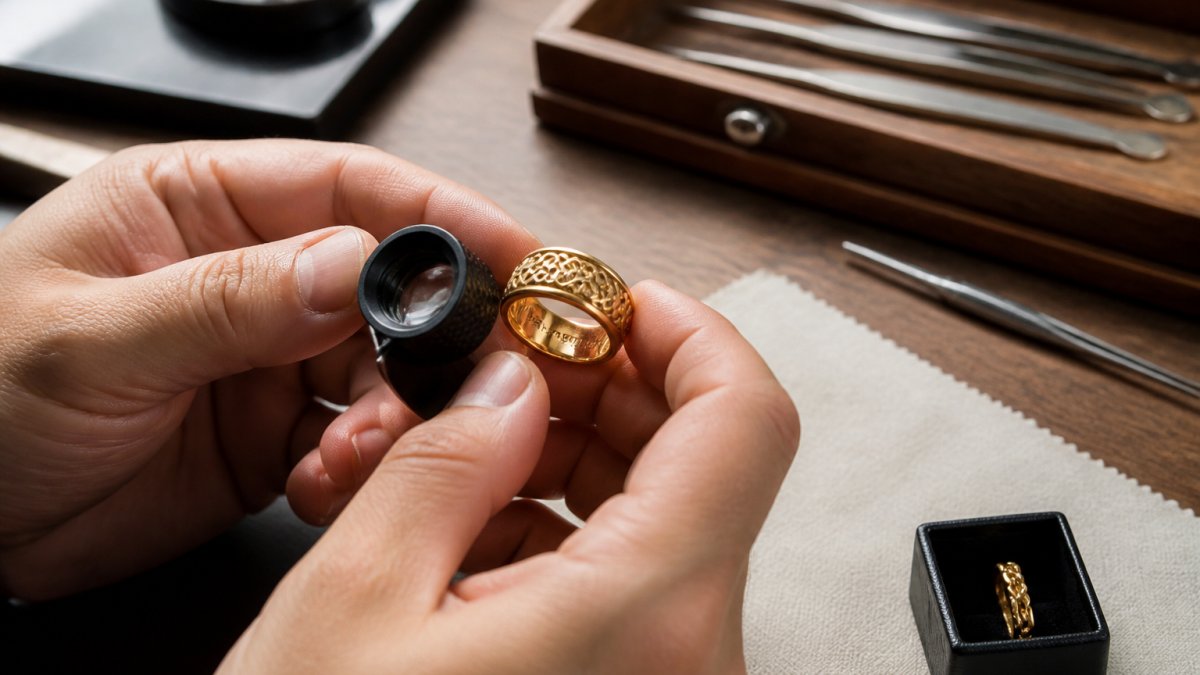
In the United States, hallmarks typically include a karat mark (10K, 14K, 18K), a maker's mark, and sometimes an assay office stamp. European hallmarks often add a purity number, assay office mark, and year of manufacture.
What Hallmarks Tell You (and What They Don't)
A hallmark proves purity, not craftsmanship, design quality, or gemstone authenticity.
Hallmarks also don't guarantee fair pricing. A 14K piece might be priced competitively or marked up significantly based on design, brand, or perceived rarity.
What hallmarks do tell you: the metal is what it claims to be. Without one, you're trusting the seller's word, riskier than trusting an official mark stamped into the metal itself.
Identifying Maker's Marks and Assay Office Stamps
A maker's mark is typically the jeweler's initials or a unique symbol, a form of accountability: that jeweler has put their reputation behind the work.
Assay office stamps vary by country.
A maker's mark and assay stamp suggest the piece went through official testing. It's not a guarantee of craftsmanship, but it is a guarantee of metal content.
Solid Gold vs Gold Plated Jewelry: Durability and Value
This distinction directly affects how long your jewelry lasts and what it's worth.
Solid gold jewelry is made entirely of gold alloy throughout the entire piece.
Solid gold costs more upfront but lasts indefinitely and can be repaired, resized, and refinished. Gold-plated jewelry is affordable initially but typically lasts 2-5 years before the plating wears noticeably, and usually can't be re-plated cost-effectively.
Gold-Filled vs Plated: How They Differ
Gold-filled jewelry occupies the middle ground: a thicker layer of gold bonded to a base metal, typically 5% of total weight by law.
A gold-filled bracelet worn daily holds up better than a plated one: a practical compromise between cost and longevity.
When buying high quality jewelry, understand what you're purchasing. Solid gold is an investment, gold-filled is practical for everyday pieces, and plated is fashion jewelry, beautiful but temporary.
Signs of Quality Jewelry Craftsmanship You Can Inspect
Craftsmanship is where the metal meets the maker's skill. You can hold a piece in your hand and feel the difference between rushed work and careful construction.
Finish and Surface Quality
Run your finger across a well-made piece.
High quality jewelry has clean lines and consistent polishing. Intentional texture is a design choice; accidental roughness is poor craftsmanship.
Look at the edges. Sharp enough to cut you is a red flag. Edges should be beveled and smooth, corners rounded. These details take time and skill, visible signs the maker cared about the finished product.
Clasps, Closures, and Hardware
The clasp is where most jewelry fails. Cheap clasps break easily, wear out quickly, or don't stay closed reliably. A high quality clasp should feel substantial and secure.
Press the clasp several times. Does it click firmly and feel like it will hold?
Hinges on lockets should be smooth and tight, and screw backs on earrings should turn without stripping.
Weight and Feel as Quality Indicators
Hold the piece. Does it feel solid and substantial, or hollow and light? Solid gold has weight. Lightweight pieces often indicate plating or hollow construction.
Evaluating Gemstone Quality and Stone Settings
If your piece includes gemstones, their quality and security matter as much as the metal.
Assessing Gemstone Clarity, Cut, and Color
Clarity refers to the absence of inclusions visible to the naked eye. A high quality gemstone should be eye-clean.
Cut affects how light moves through the stone.
Color should be consistent across the stone. Uneven coloring or a stone that looks different depending on the angle suggests lower quality or potential treatment issues.
Secure Stone Settings and Prong Integrity
The setting holds the stone in place. Look at the prongs: are they intact and gripping tightly?
Gently try to move the stone. It should not move at all; if you can wiggle it, the setting is compromised.
Bezels should be smooth and tight, and tension settings should feel absolutely secure. A stone about to fall out is not high quality jewelry, regardless of its inherent value.
How to Check Jewelry Quality Online Before You Buy
Buying jewelry online requires extra diligence because you can't hold it or examine it in person before purchase.
Product Descriptions and Specifications to Review
Read the full product description. It should specify metal type (solid gold, gold-filled, plated), karat mark, and weight, plus clarity, cut, and color for gemstones.
Look for specific measurements. A high quality listing includes dimensions, weight, and material composition.
Check the return policy. A business confident in its quality stands behind its products with a reasonable return window.
Verification and Return-Risk Checklist for Online Purchases
Before ordering, verify the seller provides detailed photos from multiple angles showing the hallmark, clasp, setting, and finish clearly.
Check the seller's reviews.
Ask questions before buying.
When the piece arrives, inspect it immediately: check the hallmark, examine the finish, test the clasp.
At The Basket Filler, we understand that buying personalized jewelry online requires confidence in both the product and the maker.
Metal Weight, Durability, and Maintenance by Jewelry Type
Different metals require different care, and durability varies by intended use.
Understanding Wear and Tear Across Materials
Platinum is the most durable precious metal: dense, scratch-resistant, and lasting indefinitely, so it can be worn daily without worry.
Sterling silver scratches and tarnishes more easily than gold, requiring regular cleaning and occasional polishing.
Stainless steel is extremely durable and scratch-resistant but not a precious metal. It's practical for everyday wear but has no resale value and can't be repaired if damaged.
Price and Value: What You're Actually Paying For
High quality jewelry costs more because of the materials, craftsmanship, and durability built into each piece.
When you compare prices, you're comparing craftsmanship, design, durability, and longevity, not just metal weight.
Brand reputation affects price.
Customization and personalization add cost: a bespoke piece costs more than a mass-produced design. This is where The Basket Filler's approach stands out, our custom jewelry and personalized gifts reflect the time and care invested in creating something unique for someone you love.
When evaluating price, examine the hallmark, craftsmanship, clasp, and gemstone setting.
Spotting high quality jewelry means knowing which details matter most.
When you're shopping for meaningful jewelry, whether it's an anniversary gift, a milestone piece, or a heirloom-quality item, these inspection techniques give you confidence in your purchase. When you choose a personalized piece from us, you're choosing something built to last and meaningful enough to treasure. Shop Now and discover jewelry that truly matches the person you're giving it to.
Frequently Asked Questions
How can you tell if jewelry is high quality?
High quality jewelry shows several clear markers: hallmarks and purity stamps on precious metals, secure and well-finished stone settings, smooth polished surfaces without rough edges or sharp corners, substantial metal weight that feels solid in your hand, and sturdy clasps and hardware. Fine jewelry craftsmanship is evident in even texture, clean lines, and absence of visible flaws. Solid gold, sterling silver, and genuine gemstones with proper certifications indicate better quality than plated or costume jewelry. Examine both the visible finish and the hidden details like the back of settings.
What do jewelry stamps and hallmarks mean?
Hallmarks and stamps indicate metal purity and sometimes the maker. Common stamps include 10K, 14K, 18K, or 24K for gold (showing karat purity), 925 for sterling silver, and maker's marks from the jeweler or manufacturer. These stamps prove the metal content but don't guarantee craftsmanship quality. A hallmark confirms the metal is genuine precious metal, not plated or filled. However, stamps alone don't prove durability, gemstone authenticity, or overall construction quality, they're one piece of the evaluation puzzle.
Is solid gold better quality than gold-plated jewelry?
Solid gold is significantly more durable and valuable than gold-plated jewelry. Solid gold (10K, 14K, or 18K) maintains its integrity through years of wear, while gold plating is a thin layer that wears away with regular use, exposing the base metal underneath. Gold-filled jewelry offers a middle ground, a thicker gold layer bonded to a base metal, and lasts longer than plating but not as long as solid gold. For pieces you'll wear frequently or pass down, solid gold is the better choice. For occasional wear or budget-conscious purchases, gold-filled can be acceptable.
How can you tell if a gemstone is good quality?
Quality gemstones show clarity (minimal visible inclusions), consistent color without muddy or dull tones, and a well-executed cut that reflects light evenly. The stone should be secure in its setting with prongs that grip firmly without gaps. Certified gemstones come with documentation of their characteristics. Look for stones that appear clean and brilliant to the naked eye. Avoid stones with visible cloudiness, chips, or loose settings. For diamonds, certifications from reputable labs provide detailed grading; for colored stones, certification adds credibility but visual inspection of clarity and color remains important.
What should I look for when buying fine jewelry online?
Review detailed product descriptions that specify metal type, karat weight, gemstone certifications, and dimensions. Request high-resolution photos showing the front, back, sides, and clasp. Verify the seller's return policy and guarantee, ethical retailers offer satisfaction guarantees. Check for maker's marks or brand reputation. Ask about materials and construction before purchasing. Confirm fast shipping timelines. A reputable online seller will provide transparency about sourcing, craftsmanship location, and quality standards. Avoid listings with vague descriptions, poor photos, or unclear return policies.
What are signs of poor-quality jewelry?
Poor-quality jewelry shows rough or unpolished edges, sharp corners, and uneven surfaces. Missing or illegible hallmarks on precious metal pieces suggest plating or costume jewelry. Loose or damaged stone settings, bent prongs, and weak clasps indicate poor craftsmanship. The metal feels lightweight or flimsy. Visible scratches, discoloration, or tarnishing appear quickly with minimal wear. Gemstones appear cloudy, have visible inclusions, or are poorly cut. Costume jewelry often uses base metals, synthetic stones, or low-grade materials. If a piece feels cheap, looks hastily finished, or shows wear immediately after purchase, it's likely poor quality.
How can you tell if a piece of jewelry is well made?
Well-made jewelry displays consistent polishing and smooth surfaces throughout, including hidden areas like the back of settings and inside bands. Prongs are evenly spaced and hold stones securely without gaps. Clasps and closures function smoothly and feel sturdy. Seams and joints are clean with no visible solder drips or rough spots. The overall weight feels appropriate for the metal type, substantial but not excessive. Construction shows attention to detail in every component. Fine jewelry from reputable makers often includes maker's marks and comes with documentation of materials and craftsmanship.
How do you check the quality of jewelry online?
Start by examining detailed product photos from multiple angles, including close-ups of settings, clasps, and any hallmarks. Read specifications carefully: metal type, karat or purity, gemstone certifications, and dimensions. Research the seller's reputation and customer reviews specifically about quality and durability. Verify the return policy and satisfaction guarantee before purchasing. Ask the seller questions about construction, sourcing, and materials. For significant purchases, request additional photos or a video call to inspect details. Check whether the seller provides certificates or documentation for gemstones and precious metals. Compare descriptions across multiple sources to identify consistent quality markers.


