


Table of Contents
- Why American Made Claims Matter to Your Purchase
- FTC Made in USA Standard Requirements You Should Know
- The Difference Between Assembled and Made in USA
- How to Verify American Made Claims: A Step-by-Step Checklist
- How to Report False Made in USA Claims
- What Happens When Companies Get Caught
- Frequently Asked Questions
Last Updated: September 14, 2026
Why American Made Claims Matter to Your Purchase
A "Made in USA" label is one of the most trusted signals a product can carry, and it's also one of the easiest to fake. If you're trying to figure out how to verify American made claims before you spend money, you're already ahead of most shoppers. This guide from The Basket Filler walks through the exact steps you can take to confirm that a product's origin story holds up.
The stakes are real. A claim of American origin can influence whether you buy, how much you're willing to pay, and which small businesses you choose to support. That's precisely why the Federal Trade Commission polices these labels so closely, and why companies that stretch the truth face genuine consequences.
Below, we'll show you how to read a label critically, what documents to request, which tools can help, and where to report a claim that doesn't add up.
FTC Made in USA Standard Requirements You Should Know
The FTC's Made in USA standard is the backbone of every legitimate origin claim in the country. It sets the rules for what a company can and cannot say about where a product was made.
At its core, the standard requires that any unqualified "Made in USA" claim be truthful and substantiated. That means the company must be able to prove the claim, not just assert it. A qualified claim, by contrast, admits some foreign content and describes the extent of American involvement, such as "assembled in USA with imported parts."
The distinction matters because unqualified claims carry the strongest legal weight and the harshest penalties when they're false.
The 'All or Virtually All' Standard Explained
The FTC's "all or virtually all" standard means that a product claiming to be made in the USA must have no more than a negligible amount of foreign content. The burden falls on the marketer to substantiate that claim.
To meet it, a company generally needs to show that final assembly or processing happened domestically and that American parts and labor make up nearly the entire product. Cost is a key factor: if foreign components represent a meaningful share of manufacturing costs, the claim likely fails.
For a personalized gift, this is where the details get interesting. A custom blanket might be designed and finished in the USA, but if the fabric itself was woven overseas, an unqualified "Made in USA" label would be misleading.
The Difference Between Assembled and Made in USA
"Assembled in USA" and "Made in USA" are not interchangeable, and treating them as the same thing is one of the most common mistakes shoppers make. The first admits foreign parts; the second does not.
Here's how the two claims compare:
| Claim | What It Means | Foreign Content Allowed |
|---|---|---|
| Made in USA | All or virtually all content is domestic | Negligible only |
| Assembled in USA | Final assembly happened domestically | Yes, significant |
| Designed in USA | Design work happened domestically | Yes, often substantial |
| Product of USA | Reserved for meat, poultry, eggs | Very limited |
A company that says "assembled in USA" is being more honest than one that hides behind a vague "American quality" tagline. Neither phrase is illegal, but only one of them supports an unqualified origin claim.
How to Verify American Made Claims: A Step-by-Step Checklist
Most guides to origin claims are written for manufacturers and lawyers. This one is written for the person holding the product, or staring at an e-commerce listing, who wants a straight answer. Verification comes down to four habits: read the label critically, request documentation, cross-check independent sources, and pressure-test the digital footprint. None of these takes long, and together they catch the vast majority of misleading claims.
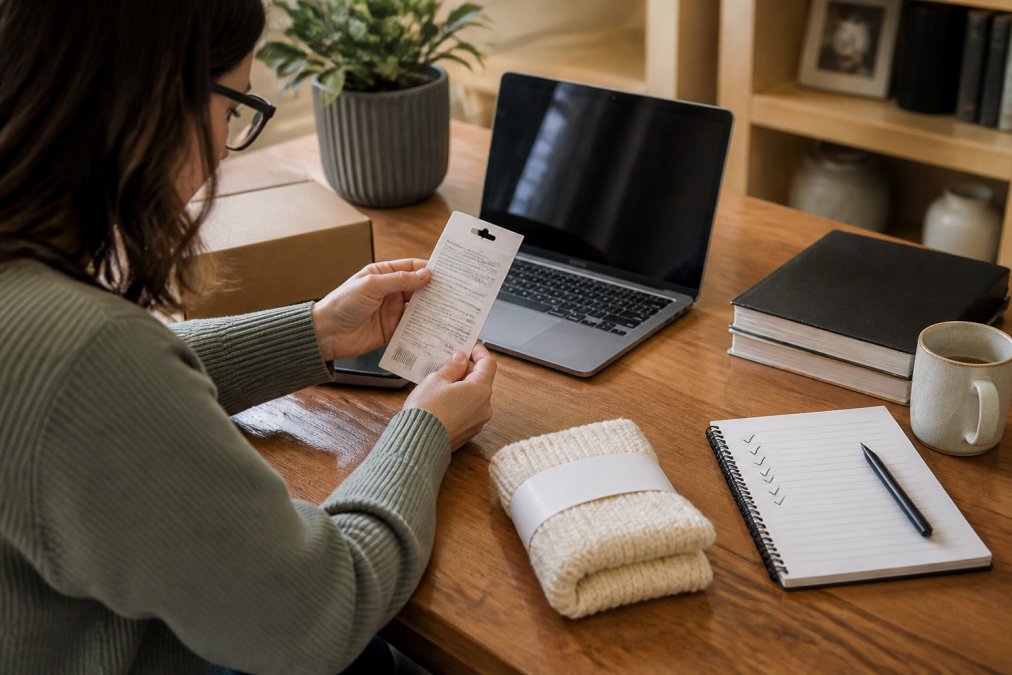
Step 1: Read the Label Like a Skeptic
Start with the physical product and packaging. Look for a specific, qualified statement rather than a vague slogan. "Made in USA" is a claim the company must substantiate. "Proudly American," "American quality," and "built with American values" are marketing noise that carry no legal weight and are often used precisely because the product cannot support a real claim.
Check whether a country of origin appears on the packaging at all. Under U.S. Customs and Border Protection country-of-origin marking rules, most imported goods must disclose their origin. If a product carries no origin statement anywhere, no "Made in," no "Product of," nothing, that absence is itself a red flag worth investigating.
Watch for these specific patterns:
- "Designed in USA", design work only; manufacturing location is unstated and often overseas.
- "Assembled in USA", final assembly domestic; parts may be substantially imported.
- "Made in USA" with no qualifier, the strongest claim, and the one most often overstated.
- A flag icon with no text, decorative, not a legal claim, but frequently read as one.
Step 2: Request Supply Chain Documentation
A legitimate maker will answer direct questions about component sourcing. Ask where the raw materials came from, where final assembly took place, and what share of manufacturing cost is domestic. Companies with nothing to hide tend to answer quickly and specifically.
A useful way to frame the request: "Can you tell me which parts of this product are sourced domestically and which are imported, and where final assembly happened?"
What a good answer looks like: named suppliers, a stated assembly location, and a willingness to put it in writing. What a bad answer looks like: "We're committed to American values," a link to a generic sustainability page, or silence. Vague answers tell you plenty.
Step 3: Cross-Check Independent Sources
This is the step most shoppers skip, and it is where the real leverage is. Three sources do most of the work:
- The FTC's warning letter and enforcement database. The FTC publishes warning letters and case press releases. Searching a brand name alongside "Made in USA" will surface prior actions if they exist.
- State attorneys general consumer complaint portals. State AGs frequently act on deceptive origin marketing faster than federal agencies, especially for local businesses.
- Consumer review platforms and Better Business Bureau profiles. Patterns of complaints about origin claims are a signal, even when no formal action has been taken.
A brand with a clean record is not automatically honest, but a brand with a documented history of origin complaints deserves a much higher level of scrutiny.
Step 4: Pressure-Test the Digital Footprint
Digital-first product verification is the newest and most underused angle. Physical labels are only half the story now, most purchase decisions happen on a screen, where origin claims are looser and harder to police.
When you are evaluating an e-commerce listing or a social media ad:
- Check the product detail page for a stated origin. If the listing says "Made in USA" in the ad but the product page is silent, that gap is meaningful.
- Look for a published sourcing or audit trail. A growing number of brands publish supplier lists, factory locations, or third-party audit summaries. That transparency is a strong positive signal.
- Reverse-search the product image. Identical photos appearing across multiple unrelated brand storefronts often indicate a white-label import with a domestic claim bolted on.
- Check the return address and shipping origin. A "Made in USA" claim paired with overseas fulfillment is worth a direct question.
- Screenshot the claim before you buy. If the claim later disappears from the listing, you have a record.
A Quick Self-Audit for Manufacturers
If you make products and want to know whether your own claim would survive scrutiny, run this five-question check:
- Did final assembly or processing happen in the United States?
- Are all significant parts and processing domestic?
- Is any remaining foreign content negligible relative to total manufacturing cost?
- Can I produce documentation for every answer above?
- Would a reasonable customer be surprised by anything I have not disclosed?
If any answer is "no" or "I'm not sure," the claim needs to be qualified, or dropped.
How to Report False Made in USA Claims
If a claim doesn't hold up, you can report it, and it's easier than most people expect. The FTC accepts complaints through its online reporting portal, and you don't need to be a lawyer or prove your case upfront.
Gather what you can: photos of the label, screenshots of the website claim, and any correspondence with the seller. Submit the report through the FTC complaint assistant. State attorneys general also accept consumer complaints about deceptive marketing, and they sometimes act faster on local businesses.
Reporting a single product may feel small, but patterns of complaints are what trigger formal investigations.
What Happens When Companies Get Caught
Enforcement isn't theoretical. The FTC has issued warning letters to dozens of companies over questionable origin claims, and it has brought civil penalties against repeat offenders. When the agency determines a claim is deceptive, it can require the company to change its labeling, run corrective advertising, or pay fines.
The consequences extend beyond fines. A public enforcement action damages trust, and for a small brand, that damage is often worse than the penalty itself. This is exactly why due diligence on your end matters: you're not just protecting your wallet, you're rewarding the businesses that do the work honestly.
At The Basket Filler, most of our products are designed and assembled in the USA, and we're happy to answer questions about where our materials come from. We'd rather you ask than assume.
Frequently Asked Questions
How to verify if a product is truly USA made?
Start by checking the label for an unqualified 'Made in USA' claim. Then look for a qualified claim like 'Assembled in USA' or 'Made in USA with imported materials.' Request documentation from the seller, such as sourcing records or a certificate of origin. You can also check the FTC's website for enforcement actions against the company. If the claim seems suspicious, report it to the FTC. A step-by-step approach works best: label, documentation, verification tools, and reporting.
What is the difference between 'assembled in USA' and 'made in USA' claims?
A 'Made in USA' claim means all or virtually all of the product's significant parts and processing are of domestic origin. 'Assembled in USA' means the product was put together in the United States, but it may contain significant foreign components. The FTC requires that an 'Assembled in USA' claim be qualified if the product contains imported parts. For example, a blanket assembled in the USA from imported fabric would need a qualifier like 'Assembled in USA with imported materials.'
What is a qualified Made in USA claim?
A qualified Made in USA claim describes the extent, amount, or type of domestic content in a product. Examples include 'Made in USA with imported materials' or 'Assembled in USA.' The FTC allows these claims as long as they are truthful and not misleading. A qualified claim is different from an unqualified 'Made in USA' claim, which means all or virtually all of the product is domestic. If a company uses a qualified claim, it must clearly disclose the foreign content.
Does the FTC regulate 'Made in USA' labeling?
Yes, the FTC enforces the Made in USA Labeling Rule, which prohibits deceptive claims. The FTC can issue warning letters, bring enforcement actions, and seek civil penalties for violations. The agency also monitors product origin claims and provides guidance on substantiation. If you spot a false claim, you can report it to the FTC. The FTC's enforcement actions show that false claims carry real legal risk, including fines and court orders.
The hardest part of buying American isn't finding products that claim it. It's finding the ones that can prove it. The Basket Filler builds bespoke, personalized gifts with most items designed and assembled in the USA, backed by a 100% customer satisfaction guarantee and fast shipping so your gift arrives when it matters. If origin and quality both matter to you, get started with The Basket Filler and give a gift you can feel confident about.


