


Table of Contents
- Why Country of Origin Matters for Gift Giving
- The FTC Made in USA Standard Explained
- How to Identify American-Made Goods: Reading Labels and Hangtags
- Spotting Misleading Country of Origin Labeling
- Vetting Small Businesses and Online Marketplaces
- Using Digital Tools to Trace Product Provenance
- A Step-by-Step Checklist for Your Next Gift Purchase
- Conclusion: Give With Confidence
- Frequently Asked Questions
Last Updated: September 8, 2026
Buying a gift that carries a genuine "Made in USA" label suggests quality materials, fair labor, and support for a small American business. But verifying that promise takes more than trusting marketing copy. Country of origin labeling is regulated by federal rules, yet deceptive labeling still slips through, which is why knowing how to verify made in USA gifts protects both your values and your wallet. At The Basket Filler, we design and assemble most of our products in the USA, so we understand the difference between a real claim and a clever one.
Why Country of Origin Matters for Gift Giving
A gift carries meaning beyond its price tag. When you choose an American-made item, you're often supporting domestic manufacturing, smaller production runs, and stricter labor and environmental standards. Country of origin also influences perceived quality, as many consumers associate domestic production with better materials and craftsmanship. Understanding provenance also helps you avoid disappointment: discovering a "Made in USA" gift was actually assembled overseas can feel like a betrayal, especially when you paid a premium for the claim.
The FTC Made in USA Standard Explained
The Federal Trade Commission regulates unqualified "Made in USA" claims under a straightforward rule: the product must be "all or virtually all" made in the United States. The FTC's Enforcement Policy Statement on U.S. Origin Claims provides the operational definition: the product's final assembly and all significant processing must occur in the United States, and all significant parts and components must be of U.S. origin. The agency interprets "virtually all" to mean that foreign content must be negligible, typically less than 5% of the product's total value.
The FTC Made in USA labeling standard provides the legal framework shoppers can rely on. Under the FTC Act, a violation occurs when a marketer makes an unqualified U.S. origin claim that is deceptive. The FTC has brought enforcement actions against companies like Williams-Sonoma, which in 2020 paid a $1 million civil penalty for falsely labeling products as "Made in USA" when they contained imported components. This case demonstrates that the FTC actively polices these claims, not just through individual complaints but through systematic sweeps of retail websites and product packaging.
This standard applies to marketing claims, not just physical labels. If a company advertises a product as American-made on its website, in a catalog, or on social media, the FTC compliance rules still apply, with penalties reaching up to $43,792 per violation as of 2024.
Made in USA vs Assembled in USA
The distinction between these two phrases is significant and legally defined. An "Assembled in USA" label means the product's final assembly happened domestically, but its components may come from anywhere in the world. The FTC requires that this label be qualified, it cannot simply say "Assembled in USA" without additional context about the origin of the parts. A compliant label might read "Assembled in USA from imported components" or "Assembled in USA with domestic and imported parts."
"Made in USA" carries the stricter legal definition under the FTC standard. It requires that the product be all or virtually all made domestically, including the raw materials and component parts. The FTC considers several factors when evaluating a claim: the amount of foreign content, its cost relative to the total product cost, and how far removed it is from the final product. For example, a foreign-sourced screw that costs $0.02 might still qualify as "Made in USA" if considered negligible, but a foreign-sourced electronic component worth $15 would not.
A product labeled "Assembled in USA" can still be a quality purchase, but it represents a different level of domestic sourcing. When you see this label, ask the seller for specifics about which components are domestic and which are imported. A transparent company will provide this breakdown; a company with something to hide will often deflect or provide vague answers. The FTC's Complying with the Made in USA Standard guidance offers consumers a clear benchmark for what companies should disclose and what claims they must be able to substantiate.
How to Identify American-Made Goods: Reading Labels and Hangtags
Physical labels and hangtags offer the first line of evidence for how to identify American-made goods. Look for explicit wording like "Made in USA," "Proudly Made in America," or "Crafted in the United States." Vague phrases such as "Designed in USA" describe the creative work, not the manufacturing location.
Many small-batch production brands proudly list their domestic manufacturing partners or the states where production occurs. If a label mentions specific cities or regions, that's a stronger signal than a generic claim.
The absence of a country of origin label can be telling. Import regulations generally require disclosure of the manufacturing country, so a missing label on a mass-produced item warrants skepticism.
Decoding Manufacturer Codes and Barcode Prefixes
A persistent myth claims the first three digits of a barcode reveal the country of origin. This is incorrect. The barcode prefix identifies the country where the company's GS1 registration was issued, not where the product was manufactured. A brand registered in the United States can still produce goods overseas.
Manufacturer codes printed on labels or hangtags are more useful but require research. These codes often appear on sewn-in tags for textiles or stamped on the base of ceramics and glassware. Searching the code alongside the brand name can reveal the actual production facility.
Spotting Misleading Country of Origin Labeling
Misleading country of origin labeling often exploits the gap between perception and legal reality. A product can feature an American flag, patriotic color schemes, and the word "America" in its name while containing mostly foreign components.
The phrase "Made in USA from domestic and imported parts" signals a product with significant foreign content. Similarly, "Assembled in USA" with no further detail leaves room for components sourced globally. Understanding these nuances prevents you from overpaying for a marketing impression.
Common Marketing Claims That Confuse Buyers
Several marketing claims create confusion about product authenticity. "Designed in USA" refers to the creative process, which can happen anywhere while production occurs overseas. "American brand" simply describes where the company is headquartered, not where its factories operate.
"Quality checked in the USA" and "Final inspection in USA" describe quality control steps, not manufacturing. These phrases appear on packaging to suggest domestic involvement without making a verifiable production claim. Consumer protection advocates recommend treating these as marketing language rather than origin disclosures.
Vetting Small Businesses and Online Marketplaces
Online-only marketplaces present unique verification challenges because you cannot inspect labels before purchase. Start by reading the product description carefully for explicit origin claims. Then visit the seller's "About Us" page to understand their supply chain transparency practices. Small businesses and micro-manufacturing operations often share their production stories openly; a brand that photographs its production floor or names its manufacturing partners demonstrates confidence in its claims. Ask direct questions before buying, reputable sellers respond with specific answers rather than vague reassurances. When evaluating a potential purchase from The Basket Filler, you can examine the product descriptions that detail how items are thoughtfully designed and assembled in the USA, reflecting a commitment to domestic production.
Using Digital Tools to Trace Product Provenance
Most guides to verifying American-made products assume you're standing in a physical store with a label in hand. But the majority of gift purchases now happen online. Here is the framework professional supply chain auditors use when they cannot physically inspect a product.
Reverse image search is your first line of defense. Save the product photo from the listing and run it through Google Images or TinEye. If the same photograph appears on Alibaba, AliExpress, or international wholesale directories, that is a strong signal the item is mass-produced overseas and the "Made in USA" claim is either misleading or applies only to a final assembly step. A unique photo set does not prove American manufacturing, but a duplicated photo on international sites is a significant red flag.
Check the company's GS1 company prefix. While the barcode prefix myth persists, the first three digits do not indicate manufacturing location, the GS1 database itself is useful. Look up the company's name in the GS1 Company Database to see where their registration is held. A U.S. registration confirms the company is a legitimate domestic business entity, though it says nothing about where their factories operate. Combine this with a check of their business registration through your state's Secretary of State database or the Better Business Bureau to confirm they operate from a physical domestic address rather than a virtual office or PO box.
For online-only marketplaces like Etsy and Amazon, use the seller verification checklist:
- Read the entire product description, not just the title. Look for the words "Made in USA" in the description body, not just in the title or tags. Sellers who use the phrase in tags but omit it from the description may be gaming search algorithms.
- Examine the seller's About page and shop policies. Etsy sellers who manufacture domestically typically share photos of their workspace, mention their equipment, or name their local suppliers. Amazon sellers with genuine domestic production often include this information in their brand story section.
- Check the seller's location and shipping origin. A seller based in Ohio who ships from a warehouse in California may be using a third-party fulfillment service, that does not necessarily mean the product is not American-made, but it warrants a direct question.
- Ask a specific question through the platform's messaging system. Instead of "Is this made in the USA?" ask "Can you tell me where the raw materials for this product are sourced and where the final assembly takes place?" A seller with genuine domestic production will provide a detailed answer. A seller who responds with "Yes, it's made in the USA" without specifics may be repeating marketing language.
- Look for third-party verification badges. Some marketplaces now offer origin verification programs. Etsy does not currently have a formal "Made in USA" certification, but Amazon's "Made in USA" filter on product searches relies on seller self-reporting, which means you still need to do your own diligence.
For textiles and apparel, the RN number is your most powerful tool. The RN (Registered Identification Number) appears on the label and identifies the business responsible for the product. Search it in the FTC RN database to confirm the company's identity and address. Then cross-reference that address with the company's stated manufacturing location. If the RN registration shows a corporate office in New York but the product claims to be made in a factory in North Carolina, verify that the company actually operates that facility. A quick search of the company name plus "factory" or "manufacturing facility" often reveals news articles, press releases, or supplier directories that confirm or contradict the claim.
Supply chain transparency platforms are emerging as a verification resource. While no single app yet provides comprehensive "Made in USA" verification across all product categories, several tools are gaining traction. The Sourcemap platform allows brands to publish their supply chain maps voluntarily, and some consumer goods companies now include QR codes on packaging that link to these transparency reports. The FTC guidance on making Made in USA claims also clarifies how companies should substantiate their marketing claims, giving you a benchmark for what to expect when you ask a seller for proof. A company that cannot or will not provide documentation when asked is not necessarily deceptive, but the absence of substantiation is a yellow flag that warrants additional scrutiny before you spend your money.
A Step-by-Step Checklist for Your Next Gift Purchase
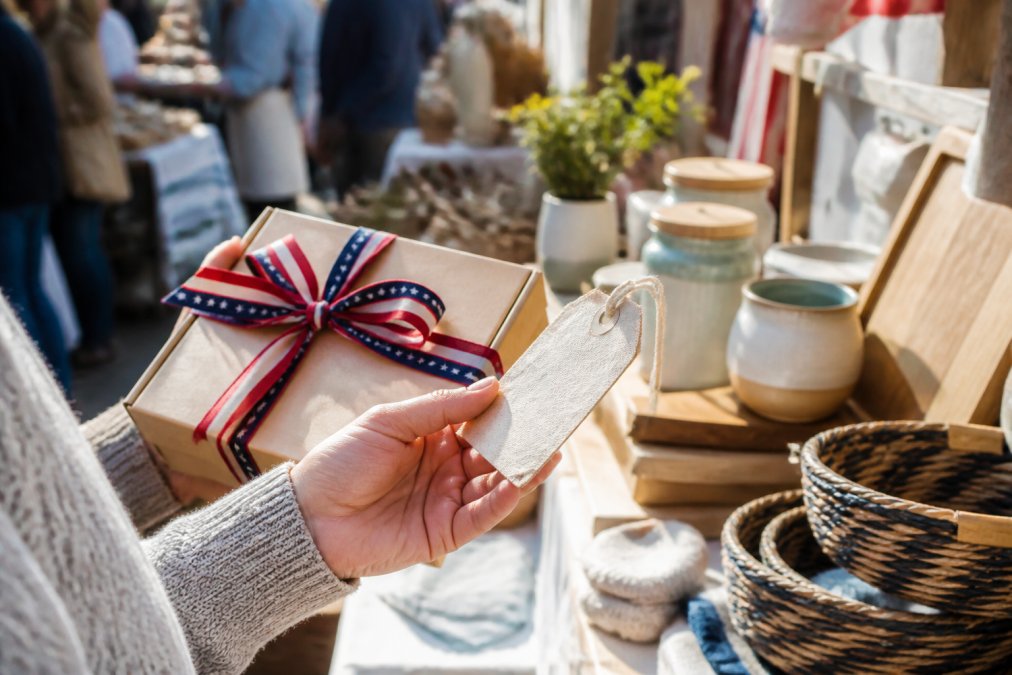
Use this checklist to verify any gift before you commit to the purchase:
- Read the exact wording. Look for "Made in USA" or "Assembled in USA" and understand the difference.
- Check for component disclosure. "Domestic and imported parts" means partial foreign content.
- Inspect the hangtag and labels. Look for specific production details, city names, or manufacturer codes.
- Research the brand. Visit their About page and look for production photos or named domestic partners.
- Ask direct questions. Email the seller about where the product is manufactured and assembled.
- Search for the product elsewhere. Reverse image search can reveal international wholesale listings.
- Verify the company's address. A physical domestic location supports their claim.
- Trust your instinct. Vague answers or defensive responses warrant caution.
| Verification Step | What to Look For | Red Flag |
|---|---|---|
| Label wording | "Made in USA" or "Assembled in USA" | "Designed in USA" only |
| Component disclosure | Full domestic sourcing | "Domestic and imported parts" |
| Brand transparency | Production photos, named partners | Vague or evasive answers |
| Digital footprint | Consistent domestic presence | Same product on international sites |
Conclusion: Give With Confidence
Verifying made in USA gifts requires attention to labeling standards, an understanding of legal definitions, and a willingness to research brands before purchasing. The FTC Made in USA standard provides a clear benchmark, but your own consumer due diligence completes the picture. When you find a brand that openly shares its domestic manufacturing story and stands behind its products, that transparency becomes part of the gift itself. At The Basket Filler, we offer personalized gifts with fast shipping and a 100% customer satisfaction guarantee, so you can shop knowing exactly what you're giving.
Frequently Asked Questions
How can I verify if a product is truly USA made?
Start by checking the product label or hangtag for the FTC's 'Made in USA' claim, which legally means 'all or virtually all' of the product comes from domestic sources. Ask the seller directly about where components are sourced and where assembly happens. For online purchases, look for detailed product pages that name the state or city of production. When in doubt, contact the company's customer service and request specifics about their supply chain.
Does 'Made in USA' mean 100% US-made according to the FTC?
No. The FTC Made in USA standard requires that 'all or virtually all' of a product's components and processing come from the United States. This allows for a negligible amount of foreign content. 'Assembled in USA' is a separate claim that means the product's final assembly happened domestically, but it may contain significant foreign parts. Always read the full label to understand which claim applies.
How can I spot misleading 'Made in USA' marketing claims?
Watch for vague phrasing like 'designed in the USA' or 'American brand' without a clear origin claim. These do not guarantee domestic manufacturing. Check the hangtag for a specific FTC-compliant statement. Be skeptical of barcode prefix myths; a barcode does not verify origin. Some companies use patriotic imagery or brand names that imply American roots while manufacturing overseas. Ask direct questions about sourcing and assembly before you buy.
What digital tools can help me research a brand's provenance?
Use the FTC's website to review the legal standard for origin claims. Search the company's About page for details on their facilities and sourcing. Check social media profiles for photos of their workshop or production line. Reverse-image search product photos to see if the same item appears on overseas wholesale sites. Use the FTC's public complaint database to see if a brand has faced action for deceptive labeling.


