


Table of Contents
- Why Personalized Gifts Cost More Than Standard Gifts
- Custom Gift Cost Factors That Drive Up the Price
- Small-Batch Production vs. Mass Production Economics
- Custom Gift Production Time and Rush-Order Fees
- Are Personalized Gifts Worth It? Value Beyond the Price Tag
- Personalized Gifts vs. Regular Gifts: What You Actually Get
- How to Evaluate Fair Pricing and Reduce Costs Without Losing Meaning
- Conclusion
- Frequently Asked Questions
Last Updated: October 19, 2026
Why Personalized Gifts Cost More Than Standard Gifts
When you order a personalized gift, you're paying for much more than the blank product itself. The price difference between a standard mug and one engraved with a name reflects real costs that don't exist in mass production.
The core reason personalized gifts cost more is simple: they require custom labor, specialized equipment, and individual attention at every stage. A factory producing 10,000 identical mugs spreads costs across thousands of units. A custom necklace with your child's name? That's made just for you. The economics are completely different.
This guide breaks down exactly where your money goes when you order a personalized gift. Understanding these cost factors helps you evaluate fair pricing and make smarter decisions about which customization methods offer the best value for your budget.
Custom Gift Cost Factors That Drive Up the Price
Personalized gifts involve multiple production steps that standard items skip entirely. Each step adds labor, equipment use, or material waste. Together, they explain why a personalized item costs more than its mass-produced equivalent.
Design Work and Setup Labor
Every personalized gift starts with design. Someone needs to take your specifications (names, dates, colors, text) and translate them into a production file. This might be a digital proof for engraving, embroidery coordinates, or a printing template.
Setup labor is where many customers underestimate costs. A designer or technician spends 15-30 minutes per order creating, reviewing, and approving your custom file. They check spelling, verify dates, ensure the design fits the product, and make adjustments based on your feedback. For a $30 necklace, this labor represents a meaningful portion of the final price.
Once your design is approved, the production equipment needs calibration. An engraving machine must be positioned precisely. Embroidery software must thread the design correctly. Printing equipment must be color-matched to your specifications. This setup happens once per order, not once per batch.
Production Methods: Engraving, Embroidery, and Printing
The method used to personalize your gift directly impacts the cost. Different techniques require different equipment, skills, and time investments.
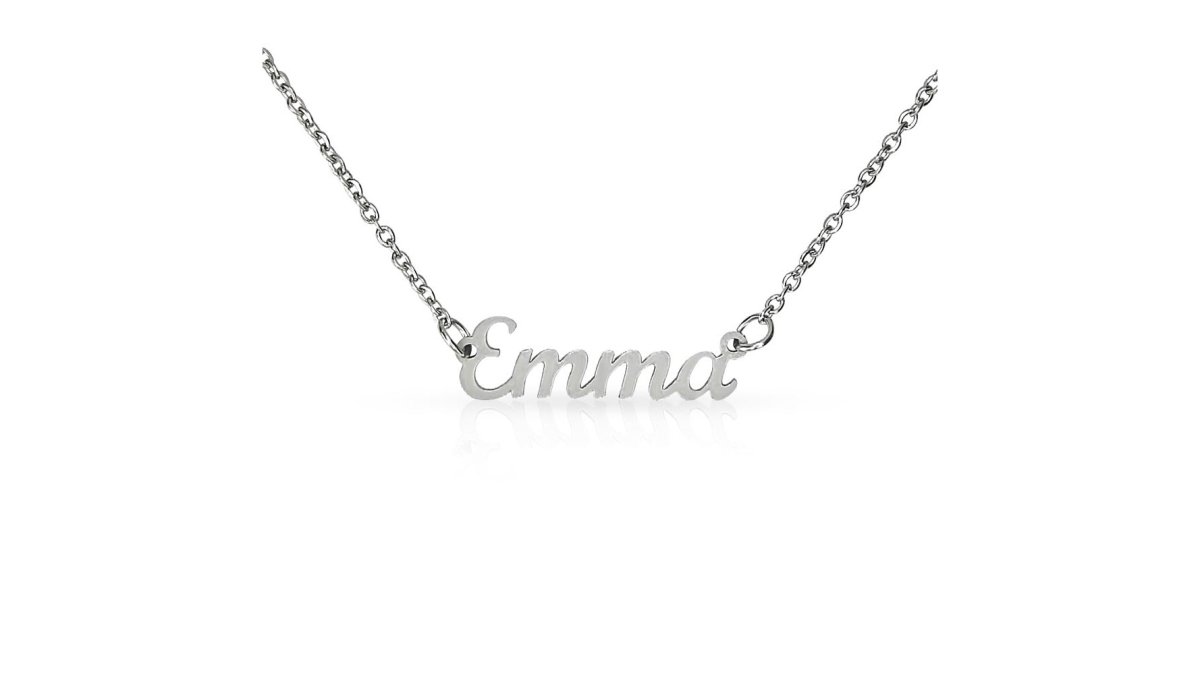
Engraving uses specialized machines to etch designs into metal, wood, or glass. A personalized necklace like our Classic Style Name Necklace uses engraving techniques that require careful positioning and quality control.

Embroidery stitches designs directly into fabric using automated machines. Setup involves digitizing your design into machine-readable format (15-30 minutes of work). The machine then stitches your design stitch-by-stitch, which takes time proportional to design complexity.
Printing (including direct-to-garment and sublimation) transfers designs onto products using heat and ink. Setup involves color separation and printer calibration. Printing is faster per unit than engraving or embroidery, but requires quality control to ensure colors are accurate and images are sharp.
Materials and Sourcing for One-Off Orders
Mass manufacturers buy materials in enormous quantities, thousands of blank mugs, yards of fabric, or sheets of metal. They negotiate per-unit costs that drop dramatically with volume. A factory buying 50,000 mugs pays a fraction of what a small producer pays for 50 mugs.
Personalized gift makers source materials differently. They buy smaller quantities of higher-quality blanks to justify the custom work investment. A premium stainless steel blank for engraving costs more per unit than cheap steel used in mass production. Better materials support the higher price point and meet customer expectations for durability and appearance.
For truly bespoke items, sourcing can become more complex. Custom materials or specialty metals, come with research time and supplier relationships. These add invisible costs that don't appear in a simple price comparison.
Quality Control and Error Risk
Mass production uses automated quality checks. Machines inspect thousands of identical items for defects. Personalized production requires human inspection of each unique item.
A quality control specialist reviews every custom order before it ships. They verify:
- Spelling is correct (no typos in names or dates)
- Design placement matches the approval
- Engraving depth is consistent
- Colors match specifications
- Packaging is undamaged
If an error is found, the item must be remade. This remake is a complete loss for the business, materials, labor, and time are invested twice. These remake costs are built into pricing. A business that doesn't charge enough to absorb occasional remakes will go under.
The error risk is highest with text-based personalization. A single typo ruins the gift. This risk is why quality control adds real cost to personalized items.
Small-Batch Production vs. Mass Production Economics
Understanding economies of scale explains why personalized gifts will always cost more than standard ones.
Mass production spreads fixed costs across thousands of units. A factory that invests $100,000 in equipment amortizes that cost across 100,000 items, $1 per item.
Labor follows the same pattern. A designer spending 20 minutes on a custom necklace costs $6-10 in wages (at $20-30/hour). That cost is absorbed by a single $30 item.
Personalized gifts can't achieve true mass production economies because each order is unique. A business can optimize processes and reduce waste, but can't eliminate the per-unit labor and per-unit risk that custom work requires.
This is why personalized items from small businesses cost more than similar items from mass producers. The small business isn't inefficient, they're simply operating under different economics.
Custom Gift Production Time and Rush-Order Fees
Standard gifts ship from existing inventory. Personalized gifts must be made after you order.
Production time for personalized gifts typically ranges from 5-10 business days. This includes design approval, production, quality control, and packaging. Some items take longer if they require specialized techniques or materials.
Rush orders compress this timeline. If you need a gift in 2-3 days instead of 7-10, the business must prioritize your order, potentially pulling staff from other projects or paying overtime. Rush fees typically add 25-50% to the base price. A $30 item becomes $40-45 with a rush fee.
Shipping also affects total cost and timeline. Standard shipping takes 3-7 business days after production. Expedited shipping costs more but ensures your gift arrives by a specific date. For time-sensitive occasions, expedited shipping is often worth the extra cost.
Are Personalized Gifts Worth It? Value Beyond the Price Tag
The price of a personalized gift is higher, but the value it delivers often justifies the cost. This is where personalized gifts differ fundamentally from standard ones.
Classic Paw Print Name Necklace →
A mass-produced mug with a generic design costs $8 and feels interchangeable. A personalized mug with someone's name costs $25 but becomes irreplaceable. The recipient knows you chose it specifically for them.
Personalized gifts create emotional value that standard gifts don't. They signal that you invested time and effort, not just money.
For milestone occasions (anniversaries, births, graduations), personalized gifts mark the moment in a way generic gifts can't. A personalized necklace engraved with coordinates of a meaningful location becomes a keepsake.
The perceived value of a personalized gift often exceeds its actual cost. Recipients typically assume personalized items are more expensive than they actually are.
Personalized Gifts vs. Regular Gifts: What You Actually Get
The difference between personalized and regular gifts goes beyond customization. It includes quality, durability, and the entire experience of receiving something made specifically for you.
Regular gifts are optimized for cost. Materials are chosen to hit a price point. Production is simplified for speed. Quality control is automated and minimal. These aren't flaws, they're design choices that make mass production possible.
Personalized gifts are optimized for meaning. Materials are often higher quality because the custom work justifies premium inputs. Production is slower because each item receives individual attention.
Here's what this means in practice:
| Aspect | Regular Gift | Personalized Gift |
|---|---|---|
| Material Quality | Budget-grade, optimized for cost | Premium-grade, matched to customization method |
| Production Time | Days (from stock) | 5-10 business days (made to order) |
| Quality Control | Automated sampling | Manual inspection per item |
| Customization | None or generic options | Fully custom to your specifications |
| Emotional Impact | Generic, interchangeable | Unique, irreplaceable |
| Longevity | Often discarded after 1-2 years | Often kept indefinitely |
| Perceived Value | Matches actual cost | Typically exceeds actual cost |
The key insight: personalized gifts cost more upfront but deliver value that extends far beyond the purchase price. A $30 personalized necklace might be kept for 30 years. A $10 generic necklace might be worn once and forgotten.
How to Evaluate Fair Pricing and Reduce Costs Without Losing Meaning
Not all personalized gift pricing is created equal. Some businesses charge fairly for the work involved.
How to evaluate fair pricing:
Start by understanding the production method. Engraving typically costs more due to equipment and skill requirements.
Check what's included in the price. Design approval, one revision, and standard shipping should be included.
Look at material quality.
Compare across similar items, not across different product types.
Ways to reduce costs without losing meaning:
Choose simpler customization. A name is cheaper to engrave than a complex design.
Select faster production timelines. Standard 7-10 day production is cheaper than 2-3 day rush orders.
Pick the right production method for your budget.
Opt for smaller customization areas. A monogram (2-3 initials) costs less than a full name.
Consider simpler materials. A personalized item in stainless steel costs less than the same item in solid gold.
At The Basket Filler, we believe meaningful personalization doesn't require maximum complexity. Our Classic Paw Print Name Necklace at $29.39 delivers personalization and quality without requiring a large budget.

Conclusion
Personalized gifts cost more because they're made specifically for someone, not mass-produced for everyone. Design work, specialized equipment, quality control, and the risk of errors all add real costs that standard gifts don't have. Understanding these cost factors helps you evaluate pricing fairly and decide whether a personalized gift fits your budget and occasion.
The higher price of personalized gifts reflects genuine value. You're investing in something unique, something made with care, and something your recipient will likely keep for years. At The Basket Filler, we stand behind every personalized item with our 100% customer satisfaction guarantee. Our products are designed and assembled in the USA, ensuring exceptional quality and thoughtful craftsmanship. Shop our collection of personalized jewelry and gifts today, and give something truly meaningful.
Frequently Asked Questions
Why do personalized gifts cost more than standard gifts?
Personalized gifts involve custom production, which eliminates economies of scale. Each item requires design work, setup time, and skilled labor to customize. Materials must often be sourced in small quantities, and quality control is stricter because mistakes can't be corrected by mass-producing replacements. These factors, design, labor, materials, and quality assurance, combine to raise the unit cost significantly compared to mass-produced alternatives.
Are personalized gifts worth the extra cost?
Whether a personalized gift is worth it depends on the recipient and occasion. Personalized gifts carry emotional value and sentimental meaning that mass-produced items cannot match. They signal thoughtfulness and effort, which recipients often value deeply. For milestone events like anniversaries, weddings, or memorials, the perceived value and emotional impact typically justify the premium. However, if budget is tight or the recipient prefers practical over sentimental, a standard gift may be sufficient.
What factors affect the price of a personalized gift?
Key cost factors include the customization method (engraving costs differently), the complexity of the design, materials used, production volume, lead time, and quality control standards. Rush orders incur additional fees. Materials sourcing for small batches is more expensive per unit than bulk sourcing. Skilled labor for custom work also adds to the cost. The more intricate the personalization, the higher the price.
How can I tell if a personalized gift price is fair?
Compare quotes from reputable vendors, but focus on what's included: materials quality, customization method, setup costs, proofing process, packaging, and shipping. Ask about their quality control process and return policy. Fair pricing should reflect the craftsmanship and materials, not just markup. Check whether the vendor is transparent about production time and rush fees. Vendors that explain their pricing breakdown and offer a satisfaction guarantee (like The Basket Filler's 100% customer satisfaction guarantee) are typically more trustworthy.


